Strategies to Boost Page Speed for Law Firm Websites

Did you know 71% of legal searches happen on mobile devices? This shows how important fast, mobile-friendly websites are for law firms. In today’s world, where speed matters most, your online presence can make or break client relationships.

Page speed strategies for law firms are now a must, not just a nice-to-have. With over 80% of law firms spending their marketing budgets online, the competition is intense. Your website’s speed can greatly affect your success, as it’s linked to user engagement and search rankings.

Think about this: 29% of users will leave if a website takes more than 5 seconds to load. For law firms, this means lost chances and potential clients. Fast websites keep visitors and boost conversion rates. By using effective strategies, your firm can stay ahead.

Key Takeaways

  • Mobile optimization is crucial for law firm websites
  • Website speed directly impacts user engagement and bounce rates
  • Fast-loading sites improve search engine visibility
  • Page speed optimization can increase conversions and client acquisition
  • Implementing speed strategies is essential for competitive advantage

The Importance of Page Speed for Law Firm Websites

Page speed is key for law firm websites. It affects first impressions, search rankings, and client happiness. Let’s look at why page load time is so important today.

First Impressions and User Experience

Your website is often the first thing people see. A slow site can scare them away fast. Research shows 40% of users leave if a site takes over 3 seconds to load.

SEO Impact and Search Rankings

Google has made page speed a ranking factor since 2010. It’s now as vital as good content and backlinks. Fast sites rank higher, giving them more visibility.

Mobile Responsiveness and Client Expectations

Today, your site must work well on phones. Over 53% of mobile users leave if a site is slow. Aim for a load time under 2.5 seconds for the best user experience.

Getting a website performance audit can really help. It improves your site’s speed, user experience, and search rankings. Professional consulting can keep you ahead in the digital world.

Understanding Core Web Vitals for Law Firms

Google core web vitals are key for law firms wanting to improve their online presence. These metrics measure how users experience your site and affect your search rankings. Let’s explore the main areas to focus on to boost your site’s performance.

Largest Contentful Paint (LCP)

LCP shows how fast your website’s main content loads. Aim for an LCP of 2.5 seconds or less. This makes it easier for visitors to find what they need, reducing the chance they’ll leave your site quickly.

Interaction to Next Paint (INP)

INP checks how fast your site responds to user actions. Law firms should aim for an INP under 200 milliseconds. Quick responses keep visitors interested in your content, which is crucial for local SEO attorneys.
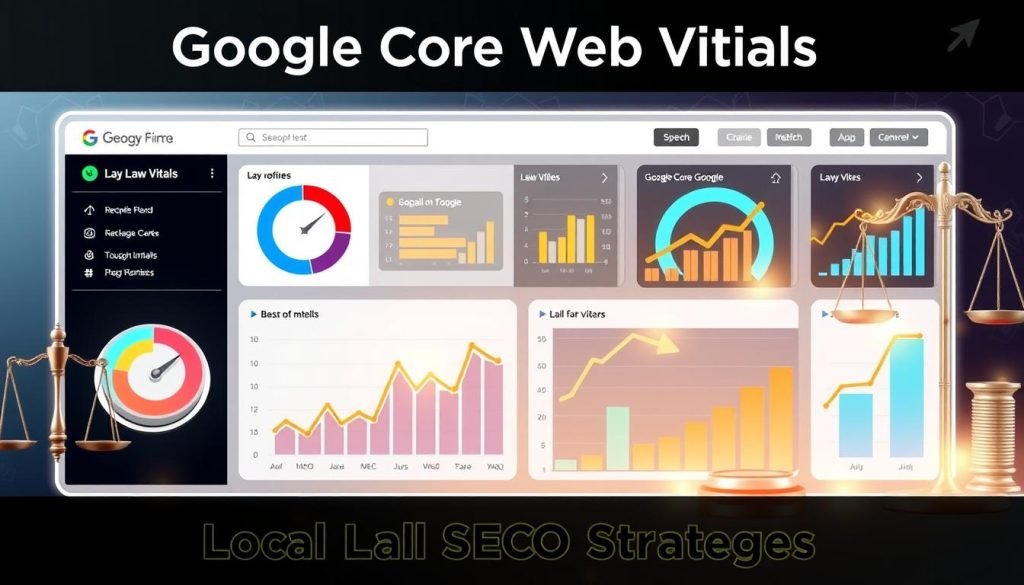
Google core web vitals law firm

Cumulative Layout Shift (CLS)

CLS looks at how stable your site’s layout is. Aim for a score of 0.1 or less. A stable layout means no annoying shifts, keeping visitors happy and potentially leading to more conversions for local SEO lawyers.

Improving these Core Web Vitals can greatly enhance your law firm’s online performance. By working on these areas, you’ll make your site more user-friendly, improve your search rankings, and attract more clients.

Page Speed Law Firm: Key Optimization Strategies

Fast websites are key for law firms in today’s digital world. They help improve user experience and search rankings. Let’s look at ways to make your law firm’s website faster.

Local seo page speed optimization

Start with a lightweight theme and clean code for a fast site. Compress images to keep them clear but quick to load. A Content Delivery Network (CDN) helps by serving content near visitors.

Lower HTTP requests and use browser caching for better performance. Choose a good hosting provider for fast server times. Make CSS and JavaScript files smaller and focus on content above the fold for quicker loads.

  • Compress images using tools like TinyPNG
  • Implement lazy loading for images and videos
  • Utilize caching plugins like WP Rocket for WordPress sites
  • Minify CSS, JavaScript, and HTML files

47% of web surfers expect pages to load in two seconds or less. After three seconds, 40% of Internet users will abandon a site.

Keep an eye on your website’s speed. Use Google PageSpeed Insights, GTmetrix, and Pingdom Tools to check and improve. These tools help with local seo optimization.

Tool Key Features
Google PageSpeed Insights Desktop and mobile performance scoring, optimization recommendations
GTmetrix Detailed load time analysis, performance history tracking
Pingdom Tools Comprehensive speed test, performance grade, bottleneck identification

By using these tips, you can make your law firm’s website much faster. This will improve user experience and your local seo. A quicker site means more engagement and better results for your legal practice.

Conclusion: Transforming Your Law Firm’s Online Presence

Optimizing page speed for law firm websites is key today. With 97% of people using search engines to find local businesses, your site’s speed matters a lot. It can make or break your online success.

By focusing on website performance for legal services, you can greatly improve user experience. This also helps your site rank better in search results.

Google’s first search result gets a 27.6% click-through rate. This shows how important page speed is for law firms to rank high. By improving local SEO and page speed, you’re not just making your site better. You’re also making your firm more visible and credible in a competitive market.

As the legal industry grows, with lawyer employment set to increase by 8% by 2032, your online presence is more crucial. Ma Consulting Services offers specialized solutions to boost your law firm’s website speed. By investing in page speed optimization, you’re setting your firm up for success in the digital age.

FAQ

Why is page speed important for law firm websites?

Page speed is key for law firm websites. It impacts first impressions, search rankings, and client expectations. A slow site can harm your reputation and lose you traffic and clients.

Google favors fast sites in search results. Today’s users, especially on mobile, expect quick sites.

What are Core Web Vitals, and why are they important for law firms?

Core Web Vitals are Google’s metrics for real-world user experience. For law firms, they’re vital for rankings and user happiness. They include Largest Contentful Paint (LCP), Interaction to Next Paint (INP), and Cumulative Layout Shift (CLS).

What strategies can be used to optimize page speed for law firm websites?

To speed up your site, use a lightweight theme and clean code. Compress images and use a Content Delivery Network (CDN). Reduce HTTP requests and enable browser caching.

Choose a good hosting provider and minify CSS and JavaScript. Focus on content above the fold and minimize redirects.

How can Ma Consulting Services help law firms optimize their website’s page speed?

Ma Consulting Services is an expert in speeding up law firm websites. They offer services like image compression, code minification, and CDN setup. They help improve Core Web Vitals, search rankings, and user experience.

Why is regular monitoring and testing of website speed important?

Monitoring and testing website speed is essential. Use tools like Google PageSpeed Insights to find and fix issues. This keeps your site fast and user-friendly for potential clients.

Source Links

Write SEO-Optimized Articles: A Step-by-Step Guide

how to write article for seo

Did you know over 90% of all blog posts get zero traffic from Google? This fact shows how vital it is to write SEO-optimized articles. These articles help draw and keep your target audience. In today’s digital world, making content that ranks well on search engines is key for your website or blog’s success.

This guide will teach you the key steps to write SEO-optimized articles. You’ll learn the basics of SEO writing and how to create high-quality content. This will help you boost your content marketing and stay ahead in the competition.

Key Takeaways

  • SEO writing means making content that search engines like, making it easier for people to find.
  • Writing SEO-friendly articles is key to getting more visitors to your site. It helps you rank better in search engine results.
  • Doing thorough keyword research, understanding what people are searching for, and making your content valuable are key to good SEO writing.
  • Making your articles easy to read, using clear headings, and adding links to other parts of your site can make your content better for SEO.
  • Always work on making your SEO writing better to get more visibility, engagement, and conversions for your online business or blog.

Understanding SEO Content Writing

In today’s digital marketing world, seo writing is key for businesses wanting to boost their online presence. SEO writing means making content that includes target keywords. This makes your website more visible on search engines, bringing in more visitors and potential customers.

What Is SEO Writing?

SEO writing is about making content that search engines can find easily. It involves using keywords and structuring content to match what people are searching for. The goal is to create content that ranks well, engages readers, and informs them.

Why Is SEO Writing Important?

SEO writing is vital today because most online searches start with a query. A strong SEO content strategy helps drive traffic, increase visibility, and generate leads and sales. The top result on a search page gets clicked by over 28% of searchers.

SEO writing does more than just boost rankings. It makes content more engaging and valuable for readers. By understanding what people are searching for, you can make content that meets their needs. This leads to more engagement, longer visits, and better conversion rates.

The Ahrefs blog is a great example of seo writing‘s impact. By creating high-quality, SEO-optimized content, they’ve increased their website traffic and ranked highly for target keywords. This has boosted their brand and brought in leads and customers for their SEO software.

seo writing

Next, we’ll explore strategies and best practices for seo-focused content. These can help improve your website’s visibility and bring in more targeted traffic to your business.

how to write article for seo

Writing articles for SEO is key to boosting your online visibility and drawing in the right audience. It requires a strategic approach. Let’s dive into the steps for creating articles that are SEO-friendly and connect with your readers.

Find Your Primary Keyword

Start by picking the main keyword you aim to focus on. Use tools like the Semrush Keyword Magic Tool for deep keyword research. Find keywords that are relevant and have a good search volume and competition level. This increases your chances of ranking well on search engines.

Choose Your Secondary Keywords

After selecting your main keyword, add secondary keywords that relate to it. These should be related to your main topic and add depth to your content. Including these keywords shows search engines your content is thorough, boosting your SEO.

Satisfy Search Intent

It’s vital to match your content with what users are looking for. Figure out the type of information they seek with your keywords, like information, directions, buying, or comparing. Make sure your article meets their needs with the right structure, tone, and information.

Create Quality Content

Quality content is the heart of SEO success. Use the Semrush SEO Content Template to guide your writing. Aim for the right word count, readability, and other optimization factors. Add visuals, links, and a clear structure to improve user experience and SEO.

By following these steps, you can write articles that rank well and engage your readers. Success comes from a detailed, data-driven approach that meets search engine and user needs.

keyword research

Tool Key Functionality
Semrush Topic Research Generates topic cards based on a seed word or phrase, providing existing headlines and questions people ask Google related to the topic.
Semrush Keyword Magic Tool Provides a comprehensive list of related keywords grouped into sub-lists after entering a seed query.
Semrush Keyword Difficulty Evaluates the competition for a target keyword, available in keyword reports as KD%.
Semrush SEO Content Template Offers recommendations on word count, semantically related words, readability score, backlink domains, page title, meta description, and keyword use.
Semrush SEO Writing Assistant Integrates the SEO Content Template, allowing real-time grading of content optimization and tone of voice analysis on a 10-point scale.

“Successful blog posts that are engaging and enjoyable are more likely to be shared, increasing rankings.”

Conclusion

In this guide, we’ve covered the key steps for writing SEO-optimized articles. These steps help boost your online visibility and draw in more readers. We’ve looked at the basics of SEO writing and how to use keyword research, content creation, and optimization.

Key takeaways for writing SEO articles include finding your main and secondary keywords. It’s also important to make sure your content meets what users are searching for. And, always aim to create content that adds value to your readers.

SEO-optimized content is crucial today, with lots of competition online. Writing SEO-friendly articles helps you reach your audience, increase engagement, and meet your business goals. Follow the strategies in this guide to become a pro at SEO content writing.

FAQ

What is SEO writing?

SEO writing means making content better for search engines. It also makes sure the content helps and values readers.

Why is SEO writing important?

SEO writing boosts your website’s visibility. It brings more visitors to your site, as seen on the Ahrefs blog.

How do I find the primary keyword to target?

Start by picking the main keyword. Look for keywords that are relevant, searched often, and not too hard to beat.

What are secondary keywords, and how do I choose them?

Secondary keywords are extra terms that fit with your main keyword. Picking the right ones helps you meet search intent better and make your content richer.

How do I ensure my content aligns with search intent?

It’s key to know what people are looking for with your keywords. Make sure your content gives the info and solutions they need.

What are the key elements of creating high-quality SEO-optimized content?

For SEO-friendly articles, aim for informative, original, and convincing content. It should be well-organized, look good, and easy for search engines to find.

Source Links

How to Use SEO Videos to Double Your Visibility in Google

what is seo video

Did you know that over 500 hours of video content are uploaded to YouTube every minute? This shows how big video is in today’s digital world. As a smart business owner or marketer, you should use video for SEO.

Video is key for SEO, making a site rank better and bringing in more visitors. Adding video can increase organic traffic by 10% to 250%. It also helps with SEO metrics like time on page and backlinks.

Video thumbnails grab attention and can get more clicks. Video transcripts help search engines index your content better. By using what is seo video, video seo optimization, and video ranking factors, you can boost your online visibility and reach more people.

Key Takeaways

  • Video content is key for better SEO and online visibility.
  • Optimizing your youtube seo and video content helps with SEO metrics like time on page and backlinks.
  • Good video marketing and video content strategy can get more clicks and engage users.
  • Using video content optimization and video seo tips makes your content easier to find and index by search engines.
  • Applying video seo best practices and video seo techniques can make your brand a leader in your field.

Why Video is Critical for SEO

Video content is key for boosting your online presence and SEO results. Search engines like Google value video content a lot. Using video can greatly improve your SEO and marketing strategy.

The Connection Between Video and Search Rankings

Research shows that 26% of search results display a video thumbnail next to the listing. This makes users more likely to click on those results. Adding video to posts can increase organic traffic by 10% to 250%.

This shows how important a good video content strategy is for SEO. It also helps with video optimization and ranking factors.

Video content keeps users on a page for longer. People spend over twice as long on pages with video. This is good for SEO because Google likes content that keeps users engaged.

Video also helps with YouTube SEO and overall SEO. It can get more backlinks, which is good for SEO. This is because video is shared more on social media, leading to more engagement.

“93% of online experiences start with a search engine, emphasizing the importance of appearing on the first page of search results.”

Video is crucial for SEO and search rankings. Adding video to your marketing strategy is key for success online. Video can greatly improve your SEO and bring more traffic to your site or Maconsultingservices.site.

What Is an SEO Video?

video seo

Optimizing Your Videos SEO

To make your video content more visible and impactful, you need to optimize it for what is seo video. By using the best video SEO practices, you can boost your video’s ranking in search engines. This leads to more traffic and engagement on your content.

On-Page Video Optimization

Start by making sure your video’s on-page elements are set up right. This means optimizing the title, description, and tags to clearly tell search engines what your video is about.

  • Put relevant keywords in the video title, keeping it under 60 characters for better visibility.
  • Write a detailed video description that covers the main points, including keywords and phrases.
  • Choose tags that help search engines understand your video’s context and themes.

Video Hosting and Embedding

How you host and embed your videos affects their SEO too. Here are some tips:

  1. Use platforms like YouTube or Vimeo for hosting because they have SEO features and work well with search engines.
  2. Put your videos on your website to make them part of your site’s structure and content.
  3. Use schema markup, like VideoObject schema, to give search engines more info about your video.

Video Content and Engagement

The quality and how engaging your video is matter a lot for SEO. Aim to make videos that are both informative and fun for your audience. This can help improve watch time, which search engines look at a lot.

Video SEO Optimization Technique Potential Impact
Optimizing video titles, descriptions, and tags Improved discoverability in search engine results
Leveraging YouTube or Vimeo for video hosting Enhanced integration with search engine algorithms
Embedding videos on your website Improved visibility and relevance within your website’s content
Implementing schema markup Providing search engines with additional context about your video content
Creating engaging, high-quality video content Increased watch time and user engagement, which can boost search rankings

By using these video SEO tips, you can make your videos more visible and successful in search engine results. This means more traffic and engagement for your website or channel. Next, we’ll look at building authority and engagement through video marketing.

video seo optimization

Building Authority and Engagement

Creating a strong video SEO strategy is more than just optimizing your videos. It’s about becoming a trusted expert and engaging deeply with your audience. By sharing high-quality, valuable video content, you can boost your brand and your video ranking factors on platforms like YouTube SEO.

To become an authority, make videos that teach and inform your audience. Use video seo tips and video seo best practices. This includes optimizing your video details, using the right keywords, and asking viewers to interact. Also, join in on comments to show your knowledge and build a community around your video content strategy.

Getting your audience to engage is crucial for video marketing success. Use video seo optimization, interactive parts, and stories to grab your audience’s attention. Work with influencers or experts to gain more authority and reach more people. Share your content on Maconsultingservices.site and social media to spread the word and bring more viewers to your video content. Need help creating your first SEO video? Book a free strategy call with Ma Consulting Services now! Download our free linking building pdf here!

Why Video Content Matters in 2025

Video content has become indispensable in 2025 for businesses, creators, and marketers aiming to maximize their digital impact. Here’s why video is at the forefront of online strategy this year:

  • Unmatched Engagement and Reach
    Video remains the most engaging digital format, consistently holding user attention longer than text or images. With the average internet user now spending 3.5 hours per day watching videos, platforms like TikTok, Instagram, and YouTube have shifted their algorithms to prioritize video, making it the key driver of reach and engagement46.

  • SEO and Traffic Powerhouse
    Search engines increasingly favor video-rich content. Pages with embedded videos experience higher dwell times and lower bounce rates—two critical factors that boost SEO rankings. According to recent research, video content is 53 times more likely to generate organic search rankings than plain text, and 86% of marketers report increased website traffic from video56.

  • Higher Conversion Rates
    Videos on landing pages can increase conversion rates by over 80%. Their ability to demonstrate benefits, simplify complex topics, and build trust leads to more informed and motivated customers23.

  • Versatility Across Platforms
    Video adapts seamlessly to social media, websites, webinars, and ads. Short-form videos, in particular, cater to fast-paced consumption and are favored by both users and algorithms. In 2025, 73% of consumers prefer short videos to learn about products or services46.

  • Effective Communication and Education
    Videos break down complex information into digestible, visual stories. This makes them ideal for educating audiences about new technologies, services, or concepts—especially as industries innovate rapidly25.

  • Emotional Connection and Brand Loyalty
    The combination of visuals, sound, and storytelling in video creates a stronger emotional connection, driving brand awareness and loyalty. Video content is more likely to be shared, further expanding your reach organically25.

  • Essential for Business Growth
    With video accounting for 65% of all global internet traffic in 2024 and rising, businesses that prioritize video marketing are better positioned to grow, engage audiences, and achieve their goals in 202536.

In summary:
Video content is no longer optional—it’s the most effective tool for capturing attention, improving SEO, educating audiences, and driving conversions in 2025. Brands that embrace high-quality, strategic video will continue to outperform competitors across digital channels.

How to Optimize Your Video for Google

  • Choose a Relevant, Keyword-Rich Title

    • Use keywords your audience is searching for, but keep the title natural and compelling.

    • Example: Instead of “My Business Video,” use “How Local Businesses Can Boost Visibility with SEO Videos.”

  • Write a Detailed, Keyword-Optimized Description

    • Summarize your video’s content in 150–300 words.

    • Naturally include target keywords and related phrases.

    • Add important links and timestamps for user navigation.

  • Add Accurate, Comprehensive Video Transcripts

    • Upload a transcript or captions so Google can index your spoken content.

    • Transcripts make your video accessible and help target additional keywords.

  • Use Custom, Engaging Thumbnails

    • Design a thumbnail that stands out and accurately represents your video’s topic.

    • Avoid misleading images; clear visuals build trust and improve click-through rates.

  • Implement Video Schema Markup

    • Add VideoObject structured data to your web page to help Google display your video in rich results.

    • Include properties like title, description, thumbnail URL, upload date, and duration.

  • Host Videos on Fast, Mobile-Friendly Pages

    • Ensure your video loads quickly and plays smoothly on all devices.

    • Use responsive design and avoid intrusive ads or pop-ups.

  • Encourage Engagement Signals

    • Ask viewers to like, comment, share, or subscribe within your video and on the page.

    • Higher engagement can signal quality and relevance to Google.

  • Promote Your Video Across Platforms

    • Share your video on social media, email newsletters, and relevant forums to build backlinks and drive traffic.

    • More external signals can help your video rank higher.

  • Monitor Performance and Update Regularly

    • Use analytics to track views, watch time, and engagement.

    • Refresh titles, descriptions, or thumbnails based on what works best.

By following these steps, you maximize your video’s chances of ranking well in Google search and providing a helpful, high-quality experience for your audience.

5 Ways to Use SEO Videos to Rank Higher on Google

Integrating videos into your SEO strategy is not just about having a presence on YouTube; it’s about leveraging video content to improve your overall search engine rankings. Here are five actionable ways to use SEO videos effectively:

  1. Embed Videos on High-Authority Pages:

    • Explanation: Embedding relevant videos on your key service or product pages can significantly increase time-on-page, a crucial ranking factor.

    • Action: Identify your highest-traffic pages and create short, engaging videos that complement the existing content. For example, a video demonstrating how to use a specific product or a client testimonial.

  2. Create Video Transcripts for Enhanced Indexing:

    • Explanation: Search engines can’t “watch” videos, but they can read transcripts. Providing a complete transcript ensures that your video content is fully indexed, improving its visibility for relevant keywords.

    • Action: Use a transcription service or YouTube’s auto-transcription feature to generate a text version of your video’s audio. Review and edit for accuracy before adding it to your video’s description or embedding it on your website.

  3. Optimize Video Titles, Descriptions, and Tags:

    • Explanation: Just like with written content, optimizing your video’s metadata is crucial. Use relevant keywords in your title, write a detailed description that provides context, and add tags that help search engines understand your video’s topic.

    • Action: Research keywords related to your video’s content using tools like Google Keyword Planner or Ahrefs. Craft a compelling title under 60 characters, write a description of at least 200 words, and add a mix of broad and specific tags.

  4. Build Backlinks to Your Video Content:

    • Explanation: Backlinks remain a vital ranking factor. Encourage other websites and blogs in your niche to link to your video content.

    • Action: Share your videos on social media platforms, reach out to relevant influencers and bloggers, and participate in industry forums. Consider creating valuable, shareable video content, such as tutorials or interviews, to attract backlinks naturally.

  5. Leverage Video Schema Markup:

    • Explanation: Schema markup helps search engines understand the context of your video content, increasing the likelihood of rich snippets and enhanced search results.

    • Action: Implement VideoObject schema markup on the pages where you embed your videos. Include details like the video’s title, description, thumbnail URL, upload date, and duration.

By implementing these five strategies, you can significantly improve the SEO performance of your videos and drive more traffic to your website. Remember, consistency and quality are key. Regularly create and optimize video content to establish your brand as an authority in your niche. Need help creating your first SEO video? Book a free strategy call with Ma Consulting Services now! Download our free linking building pdf here!

About Us

This article was written by Mark Anderson, founder of Ma Consulting Services, with 8+ years in local SEO and video marketing.”

FAQ

What is the connection between video and search engine optimization (SEO)?

Adding video to a website can boost organic traffic by 10% to 250%. Video content improves SEO by increasing time spent on page and backlinks. Thumbnails also make people more likely to click on the video.

How can I optimize my videos for SEO?

To make your videos SEO-friendly, use keywords in titles, descriptions, and tags. Also, create eye-catching thumbnails and provide transcripts for better indexing. Optimizing these elements helps search engines understand your content.

What strategies can I use to build authority and engagement for my video content?

To boost your video’s authority and engagement, publish consistently high-quality videos. Use calls-to-action to encourage interaction. Make your channel page better with playlists and branding.

Working with influencers and embedding videos on your site can also increase traffic and shares.

Source Links

Mastering Competitor Analysis in SEO: A Guide

how to do competitor analysis in seo

SEO rankings are key to online success. Being on the first page of search results means you’re doing well. But, keeping ahead of the competition is tough. A deep dive into SEO competitor analysis can help you beat them and boost your ranking. This leads to more organic traffic and quality leads.

An SEO competitor analysis looks at your competitors’ online presence and marketing. It helps you see what SEO strategies work best for you. With this knowledge, you can make smart choices and improve your search engine rankings.

Key Takeaways

  • Competitor analysis is crucial for SEO success and staying visible online.
  • Knowing who your competitors are and their strategies gives you insights.
  • Using SEO tools like SEMrush and Ahrefs makes analyzing competitors easier.
  • Doing a detailed keyword gap analysis shows how to beat your competitors.
  • Watching your competitors’ content and link-building helps shape your SEO strategy.

Understanding the Importance of SEO Competitor Analysis

Why Conduct an SEO Competitor Analysis?

Doing a deep SEO competitor analysis is key to a strong SEO strategy. By looking at your competitors’ online presence and marketing, you learn a lot. This helps you improve your own strategy and beat them in search results.

SEO competitor analysis lets you make smart choices with data. You see what your competitors do well and not so well. Then, you can tweak your content and SEO plan to meet your audience’s needs better.

Also, keeping an eye on competitors helps you spot trends and changes early. This lets you quickly adjust your SEO to stay competitive.

SEO Competitor KPIs Benefits of Competitor Analysis
  • Keyword rankings
  • Content performance
  • Backlink profiles
  • Technical SEO
  • User experience
  • Social media presence
  • Local SEO strategies
  • Identifying opportunities and gaps
  • Benchmarking performance
  • Staying ahead of industry trends
  • Gaining competitive intelligence
  • Uncovering link building opportunities
  • Informing content and keyword strategies
  • Improving technical SEO and user experience

By watching and analyzing your competitors’ SEO moves, you can make smart choices. This helps boost your website’s search rankings, increase organic traffic, and beat your competitors over time.

Competitor Analysis

“Conducting an SEO competitor analysis is like having a crystal ball into the strategies and tactics of your rivals. It’s a game-changing way to stay one step ahead in the ever-evolving world of search engine optimization.”

Identifying Your SEO Competitors and Analyzing Their Strategies

Doing a deep SEO competitor analysis is key to a strong digital marketing plan. If your site is already up and running, you likely know who your competitors are. But if this is your first time, start by finding out who they are.

Your main competitors are sites that top the first page of search engines for the keywords you aim for. They offer similar products or services and are fighting for the same audience as you. Knowing your opponents is vital to beating them. Before you start optimizing pages for certain keywords, make sure you know who you’re up against and what they’re after.

It’s also important to find search competitors you might not know about. If your website covers various business areas, you’ll have many rivals across different sectors. So, you need to do a detailed analysis to find all your potential competitors.

Key Steps in Identifying and Analyzing SEO Competitors

  1. Keyword Research: Begin by thinking of keywords related to your business and industry. Use tools like Maconsultingservices.site to see which keywords your competitors are using.
  2. Competitor Identification: Use SEO tools like Ahrefs’ Site Explorer to find sites that rank for your target keywords. These are your main competitors in the search engine results pages (SERPs).
  3. Competitor Analysis: Look closely at your competitors’ strategies by examining their website setup, content, backlinks, and SEO performance. This will show you their strengths, weaknesses, and where you can improve.
  4. Benchmarking: Compare your website’s metrics, like domain authority, organic traffic, and keyword rankings, with your competitors’. This will show you where you need to get better to beat them in the SERPs.
  5. Continuous Monitoring: Keep an eye on your competitors’ moves and adjust your SEO strategy as needed. The digital world changes fast, so it’s important to stay current with your competitors to keep your edge.

By following these steps, you’ll be able to find your SEO competitors, understand their tactics, and create a better SEO plan for your business. Being ahead of the competition is crucial in the digital space.

Competitor analysis

Knowing your competition is the first step to beating them in the search engine results pages.” – Ma Consulting Services

how to do competitor analysis in seo

An SEO competitor analysis is key to a strong organic search strategy. It helps you learn from others to boost your SEO. First, find out who your SEO competitors are – they’re the sites that rank for your keywords. Use tools like Rank Tracker to see who’s ranking for your keywords and check how they match with your site.

Then, look into what makes your competitors tick by checking their content, backlinks, and traffic sources. Tools like CompetitorSpyFX can show you what content works for them. See their link building strategies and find ways to get better backlinks. Use Similarweb to see where their traffic comes from and aim for those channels for your site.

Doing a detailed SEO competitor analysis gives you key insights for your strategy. You’ll see what your competitors do well, find keyword gaps, and compare your performance. This helps you make a focused content plan, boost your technical SEO, and beat your competitors in search results. Using competitor research and SEO tools is vital to stay ahead in SEO.

FAQ

What is SEO competitor analysis and why is it important?

SEO competitor analysis looks at how your competitors do in online marketing and SEO. It helps you see what works for them and what you can do better. This is key to making a strong SEO plan and beating your competitors in search rankings.

How do I identify my SEO competitors?

Your SEO competitors are websites that rank high on search engines for the same keywords as you. They sell similar products and aim for the same customers as you. Finding these sites is the first step in analyzing your competitors, especially if your site covers many industries.

What tools and techniques can I use for SEO competitor analysis?

For SEO competitor analysis, you can use many tools and methods. Some include:
– Looking at competitor backlinks to learn about their link building
– Watching how well they rank for keywords
– Checking their content strategy to spot gaps you can fill
– Examining their website traffic to see how you stack up
– Studying their link building tactics for your own strategy

How can I use SEO competitor analysis to improve my own strategy?

By deeply analyzing your SEO competitors, you can:
– Create content that beats your rivals
– Move up in search engine results and attract more visitors
– Make smart SEO decisions with data support
– Find ways to outrank your competitors and get ahead

Source Links

DIY SEO Optimization: How to Boost Your Rankings

how to do your own seo optimization

Did you know over 80% of SEO experts started with DIY search engine optimization? As a business owner or marketer, you can take charge of your online presence. This guide from Ma Consulting Services (http://maconsultingservices.site/) will teach you to beat your competitors with proven SEO strategies.

If you’re new to SEO or want to improve your skills, this article has you covered. It covers publishing great content, optimizing site metadata, and technical aspects. With the right tools and tactics, you can increase your website’s rankings and bring in more visitors. These visitors can then become loyal customers.

Key Takeaways

  • Researching keywords is key for DIY SEO. Use tools like Google Search, Google Keyword Planner, and FAQ Fox.
  • Tools like Google Analytics 4, Google Search Console, and Google Tag Manager are vital for tracking website performance.
  • Internal linking helps with website crawling and keeps users engaged. Backlinks can be earned through social media and email outreach.
  • Do SEO audits every three months for the best results.
  • Long-tail keywords draw in targeted traffic. Use tools like competitor sites, Google Search, and Google Keywords Planner for research.

Publish Relevant, Authoritative Content

Creating a strong online presence starts with making high-quality, authoritative content that speaks to your audience. For SEO, the quality and relevance of your content matter a lot. By making content that is truly useful and informative, you can draw more organic traffic and gain trust from search engines and readers.

Keywords

Choosing specific keyword phrases for each page on your site is key for better search engine rankings. Think about how your audience might look for your content and use those keywords naturally. Don’t overdo it with keyword stuffing; focus on creating content that’s easy to use.

Question keywords and long-tail keywords work well because they’re less competitive. Tools like the Semrush Keyword Magic Tool can help find these relevant, less competitive keywords.

Placing Keywords

After picking your keywords, put them in your page URLs, titles, headings, and content. This makes it clear to search engines how relevant your pages are. But keep it natural and easy to read.

Putting keywords in the right spots can boost your search engine rankings. But always put the user first and make sure your content is truly helpful and informative.

Content

It’s not just about URLs, titles, and headings. The content itself is key for search engine rankings. Make your content better by using your target keywords naturally, providing solid information, and linking to good sources.

Make your content easy to scan with bold, italics, and heading tags. Aim to create content that really helps and interests your audience.

Experience and Expertise

Using your own experiences and knowledge in your content can make it stand out. Showing your unique insights and perspectives builds credibility and connects with users. It also matches search engines’ goal of offering high-quality, relevant info.

As search engines get smarter, they value content written by real experts more. This means content from AI doesn’t rank as well.

SEO Formatting

Use bold, italics, heading tags, and other tags to highlight your keywords in a natural way. Never let SEO ruin your writing.

Adding schema.org markup gives search engines more info about your content. This can improve how your pages look in search results.

keyword optimization

Update Your Content Regularly

Keeping your website’s content fresh and up-to-date is key for SEO. Search engines see updated content as a sign of a site’s relevance. So, make sure to check and update your pages regularly. This might mean adding new info, updating stats, or improving your content.

Blogging

Having an active blog and posting new blog posts regularly can help your search engine rankings. Make sure to interlink your blog posts with your main website pages. This helps readers find more information and makes their experience better. Recent data shows that bloggers who update their posts often are 2.8 times more likely to see better results.

Doing a thorough content audit and refresh can increase organic traffic by 106%. B2B SaaS companies spend about $3,000 a month on making new content. This shows how important it is to keep updating and refreshing your content.

To keep your website’s content interesting and relevant, try these strategies:

  1. Update statistics and data in blog posts to keep them relevant.
  2. Add new research studies to increase credibility and trust.
  3. Upgrade photos or videos to make your content more engaging.
  4. Use expert quotes to make your content more authoritative.
  5. Do keyword research for better SEO optimization.
  6. Add a call to action to increase user engagement and leads.
  7. Fix and update broken links to keep your website quality high.
  8. Build internal linking for better content structure and navigation.
  9. Consolidate content to avoid keyword cannibalization and improve ranking.
  10. Refresh meta descriptions for better click-through rates.

The top three results on Google get more than half (54.4%) of all clicks. So, updating and optimizing your content for search engines is key to driving traffic and improving your online presence.

Metric Value
Increase in Organic Traffic from Content Audit and Refresh 106%
Bloggers More Likely to See Better Results from Updating Posts 2.8x
Average Monthly Spend on Content Creation by B2B SaaS Companies $3,000
Share of Clicks Received by Top 3 Google Search Results 54.4%

how to do your own seo optimization

Search engine optimization (SEO) is key for a successful online presence. It might seem hard, but you can do it yourself. Here are steps to make your website better for search engines.

Metadata

Every page on your site has metadata, or info about the page, in the <head> section. The title metadata is crucial and affects how your page shows up in search results. Make sure to check and update it as your site changes.

Title Metadata

The title metadata is what shows as the page title in the browser and in search results. If you use a CMS, the title is often set automatically. But, use keyword-rich titles to help your site rank better.

Description Metadata

Description metadata gives a quick summary of your page. Keyword metadata is less used by search engines but still useful for context.

Keyword Metadata

Keyword metadata isn’t directly used by search engines for rankings. But, it’s good to include keywords here. Aim for 3-7 phrases, each with 1-4 words.

Use Alt Tags

Always add alt tags, or text descriptions, to images and videos. This helps search engines understand your content and makes your site more accessible for everyone.

Use Schema.org Markup

Adding Schema.org markup to your pages gives search engines more info about your content. This can affect how your site appears in search results. It’s great for showing publication and update dates.

Schema.org markup example

By focusing on these DIY SEO steps, you can boost your website’s visibility in search engines. This will help drive more relevant traffic to your site.

Conclusion

Improving your website for search engines is a continuous task. It needs a full approach. Focus on creating top-quality content, making your site’s technical parts better, and using proven seo optimization methods. This will boost your site’s visibility in search results and bring more relevant visitors.

If you run a small business or are a seasoned marketer, this guide’s tips will help you boost your online presence. You’ll beat your competitors in search engine rankings. Always check your SEO performance and update as needed to keep your site doing well in the changing digital world.

With a strong content strategy, better technical seo setup, and using local and mobile-friendly methods, you can build a solid online presence. Keep focused, be ready to change, and adapt to seo optimization changes for long-term success online.

FAQ

What are some key strategies for conducting keyword research?

Start by finding specific keyword phrases for each page on your site. Think about how your audience might search for your content. Use tools like the Semrush Keyword Magic Tool to find relevant, low-competition keywords.

How can I effectively place keywords on my web pages?

Put your target keywords in page URLs, titles, headings, and content. This makes your pages more relevant to search engines. But, keep your writing natural and easy to read. Don’t overdo it.

What are the best practices for creating high-quality, optimized content?

Optimize your content by using your target keywords naturally. Provide authoritative information and link to relevant sources. Make your content easy to scan with bold, italics, and headings.

How can I leverage my own experiences and expertise to create compelling content?

Use your unique knowledge and perspectives to build credibility and engage users. Search engines value content from real experts more than generic or AI-generated content.

What are some tips for optimizing the metadata on my website?

Title metadata is key, so make it accurate and concise. Description metadata should summarize your page’s content. Keyword metadata adds context but doesn’t directly affect rankings.

How can I use alt tags and schema.org markup to improve my website’s performance?

Good alt text helps your pages rank better in image searches. Search engines use it to understand your images. Schema.org markup gives search engines more context about your content, improving how it shows up in results and crawling rates.

Source Links

Optimal Internal Links per Page for SEO Success

how many internal links per page seo

Did you know a webpage can have up to 150 internal links before search engines stop crawling? This fact shows how key it is to manage internal links well for SEO success.

Internal links connect different pages on your site. They help search engines understand your site’s layout and content order. With a smart internal linking strategy, you can make your site more visible, easier to navigate, and more trusted by search engines.

Key Takeaways

  • The optimal number of internal links per page for SEO is typically between 5 and 10 for long-form content.
  • Avoid over-optimizing anchor text, as it can be seen as keyword stuffing by Google.
  • Focus on quality and relevance in internal linking, rather than quantity, to provide a better user experience.
  • Regularly audit your internal link structure to identify and fix any broken or irrelevant links.
  • Utilize tools like Internal Link Juicer, Internal Links Manager, and Link Whisper to streamline your internal linking strategy.

Understanding the role of internal links can boost your SEO efforts. It can also increase traffic to your online business. For more on optimizing internal links, consider Ma Consulting Services (http://maconsultingservices.site/). They offer trusted digital marketing solutions.

Understanding Internal Links and Their Importance

What are Internal Links?

Internal links connect pages on your website to each other. They help users and search engines move through your site. Using them well can make your site easier to use, improve its structure, and help with SEO.

Why are Internal Links Important for SEO?

Internal links are key for SEO for many reasons:

  • Improved Crawlability and Indexation: Search engines use internal links to find and index your pages. This makes sure all your content is available in search results.
  • Link Equity Distribution: Internal links spread “link equity” or “PageRank” across your site. This helps your important pages rank better in searches.
  • Enhanced User Navigation: Good internal links make it easy for visitors to find related content. This encourages them to see more of your site.
  • Topical Relevance: Internal links show how different pages are connected. This helps search engines understand your site’s structure and content relevance.

With a smart internal linking strategy, you can boost your website’s SEO. Ma Consulting Services can help you optimize your internal links for SEO success.

how many internal links per page seo

Optimizing your website for search engines means using internal links wisely. There’s no set rule for how many internal links you should have, but experts suggest keeping them under 100 per page.

Having too many internal links can hurt your site’s user experience and search engine rankings. It’s better to place links thoughtfully. This makes navigation smoother, helps pass link equity, and adds context.

SEO experts say to have 5 to 10 internal links for every 2,000 words. But, this can change based on your website’s content. Aim to keep internal links on a page under 150 to help search engines crawl your site better.

When planning your internal links, aim for a balance. This balance should improve user experience and follow search engine rules. By doing this, you make your site easier to navigate, strengthen its structure, and boost its search rankings.

“Internal links are considered essential for SEO and can significantly impact a site’s rankings and performance in organic search.”

To get the right number of internal links per page, follow these tips:

  • Keep internal links on a page to around 100 or less
  • Have 5-10 internal links per 2,000 words of content
  • Use clear, descriptive text for your links
  • Make sure your site is easy to navigate
  • Check and update your internal links regularly

By using these tips and best practices, you can improve your website’s SEO and give your visitors a better experience. For more tailored advice on internal linking, consider talking to a top SEO agency like Ma Consulting Services.

internal links

Building an Effective Internal Linking Strategy

Creating a strong internal linking strategy is key for better SEO. It involves two main steps. First, find pillar pages and topic clusters. Then, pick the right anchor text for your links.

Identifying Pillar Pages and Topic Clusters

Pillar pages are big, foundational pages that cover your site’s main topics. They are the base of your content. Around these pages, you have topic clusters – pages that go deeper into specific topics.

Linking these pages together helps improve your site’s structure. It also shows search engines how your content is connected.

Choosing Relevant Anchor Text

The anchor text you use for links is also important. It should be clear and match the content you’re linking to. This helps Google understand your site better.

Don’t overdo it with keywords, and make sure the anchor text is helpful. A good strategy can really help your SEO. With the right setup of pillar pages and topic clusters, and smart anchor text, your site will be easy to use and search engine friendly. Ma Consulting Services can help you make a plan that fits your business.

internal linking strategy

Conclusion

Optimizing internal links on your website is key for SEO. These links help search engines understand your site and improve navigation for users. By using best practices like identifying key pages and using relevant anchor text, you can boost your site’s search rankings and traffic.

Ma Consulting Services (http://maconsultingservices.site/) can help you with a custom internal linking plan. This plan will match your business goals and improve your online presence.

Internal linking can greatly improve your website’s performance. Sites with good internal linking can see up to a 12% increase in organic traffic. They also see a 20% boost in search engine visibility and a 17% higher chance of being on the first page of search results.

Optimized internal linking can lead to a 53% increase in SERP impressions and an average increase in position of 2.9 within four months.

By focusing on internal linking in your SEO efforts, you can unlock your website’s full potential. This leads to better search engine rankings, more organic traffic, and more user engagement. A well-structured internal linking approach improves both your site’s technical aspects and the user experience. It guides visitors to the most relevant content.

Invest in your internal linking strategy today. Watch your online presence grow.

FAQ

What are internal links?

Internal links are hyperlinks that connect to other pages on the same website. They help search engines like Google understand your site’s layout. They also pass link equity between pages and make it easier for users to find what they need.

Why are internal links important for SEO?

Internal links are key for SEO because they help search engines grasp your site’s layout. They also pass authority between pages and enhance user navigation. Using them correctly with descriptive anchor text is vital for better search engine visibility and rankings.

What is the optimal number of internal links per page?

There’s no set rule for the best number of internal links per page. However, it’s advised to keep them under 100. Too many can harm user experience and affect search engine crawling and indexing.

How can I build an effective internal linking strategy?

To build a strong internal linking strategy, first identify your pillar pages and topic clusters. Then, choose relevant anchor text for your links. Linking between pillar pages and topic clusters improves your site’s structure and signals to search engines content relationships. Using clear, relevant anchor text helps Google understand your links better.

Source Links

What is SEO Program? Optimize Your Website Today

what is seo program

Did you know that 3.5 billion searches are done on Google every day? This shows how crucial search engine optimization (SEO) is for businesses and websites. SEO makes your online presence better, helping more people find and connect with your brand.

Whether you run an online store, a service business, or a blog, SEO is key to your online success. By making your website better, you can draw in more visitors, turn more visitors into customers, and increase your business’s revenue.

Key Takeaways

  • SEO helps search engines understand and index your website content, making it easier for users to find you through search.
  • Implementing SEO best practices can significantly increase your website’s visibility in Google and other search engine results.
  • SEO involves a multifaceted approach, including on-page optimization, off-page tactics, and ongoing monitoring and adjustment.
  • Creating high-quality, user-friendly content is a critical component of successful SEO strategies.
  • Leveraging the right SEO tools and techniques can help you outrank your competitors and reach your target audience more effectively.

Understanding SEO: The Key to Online Visibility

In today’s digital world, having a strong online presence is key for any business or practice to succeed. Search engine optimization (SEO) is a powerful way to boost your online visibility. It makes your website more visible and higher up in search engine results pages (SERPs). By using SEO, you can bring more qualified visitors to your site, which can lead to more sales and conversions.

What is SEO?

SEO makes your website easier for search engines like Google, Bing, and Yahoo to find and like. It uses various techniques to show search engines that your site is relevant and trustworthy. This includes making your page titles, meta descriptions, and other elements better. Good SEO strategies can help your site show up higher in search results for the right keywords. This means more people can find your business online.

Why is SEO Important?

Search engine optimization is vital for online success today. Here’s why:

  • Organic search brings in 53% of all website traffic, making it a key way to get customers.
  • The SEO market is expected to hit $122.11 billion by 2028, showing its growing importance.
  • 61% of U.S. shoppers start looking for products on Amazon, so SEO is crucial.
  • Being high in search results makes your site look more credible and trustworthy to visitors.
  • SEO is a cost-effective marketing strategy that offers long-term benefits, making it a smart choice for businesses.

Learning SEO can make your website more visible, bring in more leads, and increase conversions and sales. It’s a smart move for any business, big or small. Investing in SEO can bring big rewards over time.

SEO Ranking Factors

The Three Pillars of SEO

Search engine optimization (SEO) is built on three main parts: technical SEO, on-page SEO, and off-page SEO. These parts work together to make your website more visible and ranked higher in search engines. This leads to more people visiting your site and possibly becoming customers. Let’s look at each part and see how they help your SEO work well.

Technical SEO

Technical SEO makes sure search engines can easily find and understand your website. This means making your site fast, mobile-friendly, and easy to navigate. It also includes creating an XML sitemap and making your site easy to explore. By doing these things, you make your site better for search engines and users.

On-Page SEO

On-page SEO is about making your website’s content and structure better. This means writing great content that shows you know your stuff. It also means using SEO-friendly writing, adding good tags, and using nice images. These things help make your site better for search engines.

Off-Page SEO

Off-page SEO is about making your website look good from the outside. This means getting good links from other websites and being active on social media. Getting links from trusted sites shows search engines that your content is valuable. Using social media helps with this too.

To really succeed with SEO, you need to work on all three areas. Make your site technical, content-rich, and well-connected. This way, you can get more people to see your site, which can lead to more customers and sales.

Pillar Key Elements
Technical SEO
  • Website speed
  • Mobile-friendliness
  • XML sitemap
  • Navigability
On-Page SEO
  • Content quality and EAT
  • Relevant tags
  • SEO-friendly writing
  • Optimized images
Off-Page SEO
  • Backlink acquisition
  • Social media presence

“Understanding and implementing the three pillars of SEO is crucial for any business looking to succeed in the digital landscape. By addressing technical, on-page, and off-page factors, you can create a comprehensive SEO strategy that drives long-term, sustainable growth.”

For those in digital marketing, knowing the three pillars of SEO is key. By learning about each part, you can help your clients or your own business get better search rankings, more visitors, and more sales.

What is SEO Program? Optimizing Your Website Today

An effective SEO program is key to making your website stand out online. It uses many techniques to make your site more visible and higher in search engine results pages (SERPs). By using both on-page and off-page methods, you make your site more appealing to search engines and visitors.

Keyword research is at the core of an SEO program. You find out what words and phrases people are searching for. Then, you use these keywords in your website’s content and structure. This helps your site show up more in search results.

SEO also looks at technical parts of your website, like site speed, mobile responsiveness, and website structure. These things are important for search engines because they affect how users experience your site.

Off-page SEO techniques, like link building and content creation, also boost your site’s credibility. Getting links from trusted sources and making engaging content helps your site rank better in search results.

It’s important to keep an eye on how your SEO program is doing. Look at analytics and performance metrics like organic traffic and search engine rankings. This helps you make your strategies better over time.

With a strong SEO program, you can make your website work better for your business. It helps you grow in a lasting way. Whether you’re a small business or a big company, a good SEO plan can help you stand out online.

seo program

Key Elements of an SEO Program Description
Keyword Research Identifying the most relevant and high-volume search terms for your business
On-Page Optimization Optimizing website content, structure, and metadata to improve search engine visibility
Technical SEO Addressing website speed, mobile-friendliness, and other technical factors
Off-Page Optimization Building high-quality backlinks and improving website authority and credibility
Analytics and Reporting Tracking and analyzing key performance metrics to continuously improve the SEO strategy

Using a full SEO program that covers these key areas can help your website succeed online. The team at Ma Consulting Services is ready to help businesses of all sizes improve their online presence. They offer search engine optimization strategies for lasting growth.

Conclusion

A well-designed SEO program is key for businesses and websites wanting to get more online visibility. It helps bring in more organic traffic. By learning about search engine optimization, you can make a full plan to make your website better.

Good SEO uses many techniques. This includes making great content, finding the right keywords, and building links. Also, making your website easy to use and fixing technical issues is important. Keeping up with SEO trends keeps your website fresh and competitive.

Working with an SEO agency like Ma Consulting Services or doing it yourself can help you meet your business goals. A strong SEO plan can increase your online presence, bring in more leads, and boost sales. Putting SEO first in your digital marketing can make your online presence strong and keep you ahead of others.

FAQ

What is search engine optimization (SEO)?

SEO makes your website more visible in search engines like Google and Bing. It helps when people look for products or services you offer. It also helps when they search for information you know a lot about.

Why is SEO important?

SEO makes your website more visible in search results. The higher your pages rank, the more people will visit your site. About 64% of website traffic comes from search, not social media. Learning SEO is key to a successful online marketing plan.

What are the three main pillars of search engine optimization?

SEO has three main parts: technical, on-site, and off-site optimization.

What is an SEO program?

An SEO program aims to boost your website’s visibility and ranking in search results. It uses technical, on-site, and off-site tactics. This makes your website more friendly to search engines and appealing to users.

Source Links

What Is SEO Management? Boost Your Online Presence

what is seo management

Over 50% of website traffic comes from organic search. This shows how important search engine optimization (SEO) is in today’s digital marketing. The global SEO market is set to hit $122.11 billion by 2028. So, ignoring SEO management is not an option for businesses anymore.

This field is about making, leading, and changing strategies to get the best results. It helps achieve your marketing, sales, and business goals.

Key Takeaways

  • SEO drives 53% of all website traffic, highlighting its importance for online visibility.
  • The global SEO industry is expected to grow to $122.11 billion by 2028, indicating its rising significance.
  • Effective SEO management is essential for boosting your online presence and driving targeted traffic to your website.
  • SEO management includes tactics like keyword research, on-page optimization, off-page optimization, and technical SEO.
  • By working with a trusted SEO agency like Ma Consulting Services, you can fully improve your online presence and meet your business goals.

Unveiling the Power of SEO Management

What is SEO Management?

SEO stands for search engine optimization. It’s about making your website and content better to get more people to visit your site through search engines. This includes things like keyword research, on-page optimization, link building, and content creation. With SEO management, you can boost your online presence.

A top SEO management company, like Ma Consulting Services, knows how to handle search engine changes. They use a detailed SEO audit and SEO strategy to improve your online visibility. This means more qualified traffic and conversions for your site.

Good SEO management includes several key parts:

  • Keyword Research: Finding the keywords your audience uses to search for products or services like yours.
  • On-Page Optimization: Making your website’s content and structure better for search engines.
  • Off-Page Optimization: Getting backlinks from trusted websites to make your site more authoritative.
  • Technical SEO: Making sure your website loads fast, works well on mobile, and is secure.
  • Content Optimization: Creating content that your audience finds valuable and that search engines like.

Working with a top SEO management company like Ma Consulting Services can really boost your online presence. They use data and the latest SEO tactics to help you beat your competitors. This makes you the top choice for your target market.

“SEO is not just about getting your website to the top of search results. It’s about understanding your audience, delivering the right content, and building a sustainable online presence that drives real business results.

SEO Management

Why is SEO Management Crucial for Your Online Success?

In today’s digital world, search engine optimization (SEO) is key for online success. It helps your business stand out, draw in more customers, and succeed over time. SEO makes your website more visible and higher in search engine results. This boosts your brand’s trust and credibility, makes users happy, and leads to more sales and loyal customers.

Here are some important facts about SEO management:

  • Websites on the first page of search results get 95% of all web traffic. This shows how crucial high rankings are for online success.
  • SEO can increase conversions by 14.6% on average. This proves the power of organic traffic in reaching business goals.
  • 75% of users don’t look past the first page of search results. This highlights the need for SEO to be seen by more people.
  • 70-80% of users ignore ads and focus on organic results. This shows how important organic traffic is through SEO.
  • With 52.2% of global website traffic from mobiles, making your site mobile-friendly is key. It helps with SEO rankings and user experience.

Working with a top SEO management company like Ma Consulting Services can unlock your online potential. They’re experts in search engine optimization strategy, SEO audit, SEO tactics, content optimization, backlink building, and keyword research. Their help can lead to better rankings, more website visitors, and more business success.

Investing in on-page SEO, off-page SEO, and technical SEO can boost your online presence. It makes your site more user-friendly and drives more qualified leads and sales. Don’t let others beat you online – boost your online success with strategic SEO management.

“SEO is the gift that keeps on giving. It’s one of the most powerful marketing strategies you can implement for your business.” – Brian Dean, Backlinko

SEO Management

Conclusion

In today’s digital world, having a strong online presence is key for any business’s success. SEO management is vital for making your website more visible and bringing in more visitors. This can help take your business to new heights.

Working with a top SEO company like Ma Consulting Services can unlock your online potential. They can help you meet your business goals, whether it’s getting more people to know about your brand, boosting sales, or gaining customer trust. Investing in SEO can really make a difference for your business.

Ma Consulting Services experts will help you with everything from making your website better and building strong backlinks. They’ll guide you through what is seo management, search engine optimization strategy, seo audit, seo tactics, content optimization, backlink building, keyword research, on-page seo, off-page seo, and technical seo. With their help, you can make the most of your online presence and see real results for your business.

FAQ

What is SEO management?

SEO management makes your website more visible on search engines. It uses technical and creative methods. This includes keyword research, on-page optimization, link building, and creating content.

Why is SEO management important for my online presence?

SEO management boosts your website’s visibility on search engines. This makes your brand more credible and improves the user experience. It also increases conversions and customer loyalty.

What are the benefits of working with an SEO company?

An SEO company brings expertise and saves time and money. They help improve your online visibility. They do keyword research, on-page optimization, and link building strategies.

How can Ma Consulting Services help with SEO management?

Ma Consulting Services is a top SEO company. They help unlock your online potential with their SEO experts. This improves your website’s visibility and attracts more targeted traffic. It helps achieve your business goals, like boosting brand awareness or sales.

Source Links

What is SEO Software: Tools for Search Optimization

what is seo software

Did you know that over 90% of online experiences start with a search engine? This fact shows how important search engine optimization (SEO) is online. Businesses need SEO to be more visible online and draw in more leads. SEO software is key for this, offering tools to improve your site, track its performance, and beat competitors.

Key Takeaways

  • SEO software helps businesses make their websites more visible in search engines.
  • These tools have many features like keyword research, website checks, link analysis, content optimization, and tracking rankings.
  • Using SEO software can increase organic traffic, lead generation, and brand visibility.
  • SEO software helps businesses stay ahead and keep up with search engine changes.
  • Choosing the right SEO software is vital for your online marketing goals and improving your site’s performance.

Understanding SEO Software and Its Essential Features

In today’s digital marketing world, SEO software is key for businesses wanting to boost their online presence. These tools have many features to make websites and content search engine friendly. This helps businesses stand out online.

Types of SEO Tools

SEO software comes in different types, each with its own role. Audit tools check a website’s SEO health and suggest ways to get better. Keyword research tools find keywords that many people search for but aren’t too hard to get. Rank trackers keep an eye on how well a website ranks on search engines.

All-in-One Platforms vs. Individual Tools

There are all-in-one SEO platforms and single tools available. All-in-one solutions like Ahrefs and Semrush offer many SEO features. These include keyword research, site audits, link analysis, and content optimization.

On the other hand, tools like Screaming Frog and KWFinder focus on one task but might need more tools for all SEO needs.

Businesses should think about their goals, budget, and SEO knowledge when picking SEO software. Choosing between all-in-one or single tools depends on the complexity of SEO needs and how much integration and efficiency is wanted.

“AI has changed SEO software, making it powerful, easy to use, and saving a lot of time, giving deeper insights and scalability.”

seo tools

what is seo software: A Closer Look at Top Solutions

SEO software is key to making your website more visible online. These tools offer many features and data to help increase your site’s traffic. Let’s explore the pricing, data sources, and how often these tools update.

Pricing and Fees

SEO software prices vary a lot. Some tools have flexible plans, while others cost more. For example, Ahrefs and Semrush start at about $99 a month. On the other hand, tools like Screaming Frog and AnswerThePublic are cheaper, costing between $9 and $259 a year.

Data Sources, Update Frequency and Integrity

It’s important to know where SEO software gets its data from and how often it updates. Most tools use Google and their own crawlers for data. The best ones update their data often, sometimes even every 15 minutes, to give you the latest info.

SEO Software Pricing Data Sources Update Frequency
Ahrefs $99/month and up Google, proprietary crawler Every 15 minutes
Semrush $99/month and up Google, proprietary crawler Daily
Screaming Frog $9/year and up Google, proprietary crawler Weekly
AnswerThePublic $99/year and up Google, proprietary crawler Daily

SEO Software

Whether you’re a small business owner, a marketing pro, or an SEO expert, the right SEO software can change the game for your online presence. Knowing about pricing, data sources, and update frequency helps you choose wisely. This can boost your SEO efforts. For more info, check out Ma Consulting Services.

If you need further help, to solve your analytics problems At Ma Consulting Services, we highly recommend SEMrush for businesses looking to enhance their online presence. SEMrush is a powerful all-in-one digital marketing tool that offers comprehensive solutions for SEO, content marketing, competitor analysis, PPC, and social media. With SEMrush, you can gain deep insights into your competitors, discover the best keywords to target, and track your website’s performance with precision. By using SEMrush, you’ll be equipped with the tools needed to drive more traffic, improve your search rankings, and ultimately grow your business. Start leveraging SEMrush today to stay ahead in the digital landscape! Learn more here.

SIGN UP TO SEMRUSH

Analytics for competitors:


Conclusion

SEO software is a key tool for businesses and marketers wanting to boost their website’s search engine ranking. It has many features like keyword research and site audits. These help users find areas to improve and apply effective strategies.

When picking the right SEO software, think about the cost, data sources, and how much functionality you need. This will help you meet your goals.

Using SEO software can make your online presence stronger. It can bring in more organic traffic and help you get better results from your SEO efforts. The SEO industry is expected to grow to $122.11 billion by 2028. Organic search brings in 53% of all website traffic, showing how crucial SEO is.

At Ma Consulting Services, we know how important SEO is in today’s digital world. Our experts can guide you through SEO software options. We’ll help you find the best solutions for your business and create strategies to boost your online visibility and results. Contact us today to see how we can help you improve your SEO.

FAQ

What is SEO software?

SEO software helps websites get more visible and rank higher in search results. It offers tools for keyword research, website checks, link analysis, content improvement, and tracking rankings.

What are the types of SEO tools?

SEO tools come in different types, each with its own purpose. You can find audit tools, keyword research tools, rank trackers, and all-in-one platforms. These platforms have many SEO features.

What are the differences between all-in-one platforms and individual SEO tools?

All-in-one platforms like Ahrefs and Semrush have many SEO features. They include keyword research, site checks, link analysis, and content optimization. On the other hand, tools like Screaming Frog and KWFinder focus on one task but might need more tools for everything.

How do SEO software tools differ in terms of pricing and fees?

SEO software prices vary a lot. Some tools have flexible subscriptions, while others cost more. All-in-one platforms usually cost more, starting at about a month. Individual tools are often cheaper, from to 9 a year.

What are the key considerations when selecting SEO software?

Choosing the right SEO software means looking at pricing, data sources, how often it updates, and what you need to achieve your goals. It’s also key to trust the information the software gives you.

Source Links

WordPress SEO: How to Optimize Your Site

wordpress seo how to

Did you know over 3 million websites use the AIOSEO plugin for WordPress SEO? This fact shows how important SEO is for businesses with WordPress sites, like your Boston bookstore cafe. By using effective WordPress SEO strategies, you can boost your site’s visibility and attract more customers looking for what you offer.

This guide will cover key WordPress SEO techniques to make your site stand out. We’ll talk about choosing the best SEO plugin and optimizing your content for keywords. These steps will help improve your online presence and bring more people to your cafe.

Key Takeaways:

  • Using WordPress SEO strategies can greatly increase traffic to your bookstore cafe’s site.
  • Optimizing your site for SEO means it’s more likely to show up high in search results for your keywords.
  • SEO is crucial for any business website, including WordPress sites, to grow traffic and visibility without paying for ads.
  • Popular WordPress SEO plugins like Yoast SEO and AIOSEO help with optimizing titles, content, XML sitemaps, and boosting website authority.
  • Keeping your WordPress site updated and using relevant keywords in your content can improve your search engine rankings.

Introduction to WordPress SEO

SEO helps make your website more visible and higher in search engine results. For WordPress sites, SEO is key to getting more visitors and boosting your online presence.

What is SEO?

SEO makes your website more appealing and relevant to search engines like Google. By using smart SEO strategies, your WordPress site can rank higher in search results. This means more people can find and interact with your content.

Why is WordPress SEO Important?

WordPress SEO is crucial for several reasons:

  • Improved Visibility: SEO practices can make your site more visible in search results. This helps your target audience find your content easier.
  • Increased Traffic: Better search engine rankings mean more people visit your WordPress site. Users are more likely to click on top results.
  • Enhanced Credibility: Being at the top of search results can make your brand look more credible and authoritative. This builds trust and engagement with your audience.
  • Long-term Benefits: Good SEO strategies keep driving traffic and visibility to your site over time. This is true even as search engines change.

Learning about WordPress SEO and using the right techniques can help your website reach more people.

WordPress SEO

“Optimizing your WordPress website for search engines is a crucial step in building a successful online presence.”

wordpress seo how to: Essential Strategies

Making your WordPress site easy to find online is key to getting more visitors and growing your online presence. Using the right WordPress SEO plugins and focusing on keywords can boost your site’s rankings. This will help you draw in more potential customers. Let’s explore the key strategies to boost your WordPress SEO.

Choose the Right WordPress SEO Plugin

WordPress SEO plugins have many features to make optimizing easier. Top choices include Yoast SEO, All In One SEO Pack, and SmartCrawl Pro. These plugins help with making XML sitemaps, using tags and categories, optimizing titles and content, controlling breadcrumbs, and tracking performance with Google Analytics.

Optimize Your Content for Keywords

Creating content that speaks to your audience and meets search engine needs is key for WordPress SEO. Begin by doing thorough keyword research to find terms that fit your business and content. Then, add these keywords into your titles, headings, content, and URLs to show search engines how relevant your pages are.

  • Use long-tail keywords to draw in more specific traffic and face less competition.
  • Make sure your content meets the search intent of your audience.
  • Keep updating and refreshing your content to stay relevant and interesting.
SEO Metric Recommended Practice
Title Length Keep titles under 60 characters for full display in search results
Meta Description Limit meta descriptions to 160 characters for optimal visibility

By using WordPress SEO plugins and optimizing your content, you can make your website more visible online. This will help you attract more qualified leads. Remember, WordPress SEO is an ongoing process. Keep improving, experimenting, and refining your approach for lasting success.

wordpress seo how to

“Optimizing your WordPress website for search engines is a critical step in driving sustainable online growth and success.”

Conclusion

Investing in WordPress SEO is key to getting more visitors to your site. By using the right WordPress SEO plugin and optimizing your content with keywords, you can boost your site’s visibility. Also, using XML sitemaps helps a lot.

Remember, SEO is an ongoing task. Keep an eye on your progress and tweak things as needed. This way, your WordPress site can reach its best potential.

To boost your WordPress SEO even more, look into more WordPress SEO best practices. This includes making your title tags, meta descriptions, and URLs better for SEO. Also, keep up with the latest WordPress SEO tips and WordPress SEO tutorials.

Using Yoast SEO for WordPress and other WordPress SEO plugins can unlock your website’s full potential. It can bring more qualified visitors to your business. Follow the WordPress SEO optimization tips in this guide. With Ma Consulting Services by your side, your online presence will soar.

FAQ

What is WordPress SEO?

WordPress SEO is about making your WordPress site more visible on search engines. It helps your site show up higher in search results. This means more people can find your content, which can lead to more visitors and customers.

Why is WordPress SEO important?

WordPress SEO is key because it helps people find what you offer. When your site ranks well in searches, it reaches more of your target audience. This can increase traffic, leads, and sales for your business.

What are the essential WordPress SEO strategies?

Key WordPress SEO strategies include picking the right SEO plugin and optimizing your content with keywords. Using XML sitemaps and on-page optimization like title and URL optimization is also crucial.

What are some popular WordPress SEO plugins?

Top WordPress SEO plugins are Yoast SEO, All In One SEO Pack, and SmartCrawl Pro. They offer tools like XML sitemaps, keyword help, and Google Analytics integration to boost your site.

How do I optimize my WordPress content for keywords?

For keyword optimization, add your target keywords into your post titles, headings, content, and URLs. This makes your content relevant to search engines and can improve your ranking for those keywords.

What is an XML sitemap, and why is it important for WordPress SEO?

An XML sitemap lists all your WordPress site’s pages and content. It helps search engines find and rank your content better. Submitting it to search engines is a big step in WordPress SEO, making your site easier to find and index.

Source Links